The development process is the operational heart of Software Project Management. It defines the specific technical steps and the sequence of activities required to transform a conceptual idea into a functional, deployed software product.
In modern SPM, this is generally referred to as the Software Development Life Cycle (SDLC).
1. Core Phases of the Development Process
While the order may vary depending on the methodology (Agile vs. Waterfall), these fundamental stages remain constant:
- Requirement Analysis: Gathering detailed functional and non-functional requirements from stakeholders.
- System Design: Creating the architecture, defining data structures, and designing the User Interface (UI).
- Implementation (Coding): The actual construction of the software using chosen frameworks and languages.
- Testing & Integration: Verifying that the code works as intended and that different modules interact correctly.
- Deployment: Releasing the software to a production environment (staging or live).
- Maintenance: Fixing bugs, updating for security, and adding minor enhancements post-launch.
2. Common Development Methodologies
Choosing the right process model is one of the most important decisions a Project Manager makes.
Waterfall Model
A linear, sequential approach where each phase must be completed before the next begins.
- Best for: Projects with fixed requirements and strictly regulated industries.
- Pros: Easy to manage due to its rigidity; clear milestones.
- Cons: Very difficult to go back and change something once a phase is finished.
Agile Methodology
An iterative and incremental approach that focuses on flexibility and continuous feedback.
- Best for: Web applications, mobile apps, and projects where requirements are likely to evolve.
- Pros: Fast delivery of functional features; high customer satisfaction.
- Cons: Can lead to “scope creep” if not managed tightly.
Spiral Model
A risk-driven model that combines elements of design and prototyping-in-stages. It is particularly useful for large-scale, high-risk projects.
3. Key Management Activities during Development
The Project Manager doesn’t just watch the code being written; they manage the environment surrounding it:
Configuration Management (SCM)
This involves tracking and controlling changes to the software. It ensures that the team is always working on the correct version of the code and that “breaking changes” can be reverted.
- Version Control: Using tools like Git.
- Baselines: Marking a stable version of the software for release.
Quality Assurance (SQA)
Instead of just “testing at the end,” SQA involves continuous processes like Code Reviews and Automated Testing to catch errors as soon as they are introduced.
Resource Allocation
Ensuring that developers have the right tools (IDE licenses, cloud credits, testing devices) and that the workload is balanced so no single developer becomes a bottleneck.
4. Development Artifacts
A structured process produces more than just code; it produces documentation that ensures the project’s long-term survival:
| Artifact | Purpose |
| SRS Document | Software Requirement Specification; the “contract” of what to build. |
| Design Document | Detailed architecture diagrams and database schemas. |
| Source Code | The actual logic, properly commented and versioned. |
| Test Plan | A document describing the scope, approach, and resources for testing. |
| User Manual | Instructions for the end-user on how to operate the software. |
5. Modern Trends: DevOps and CI/CD
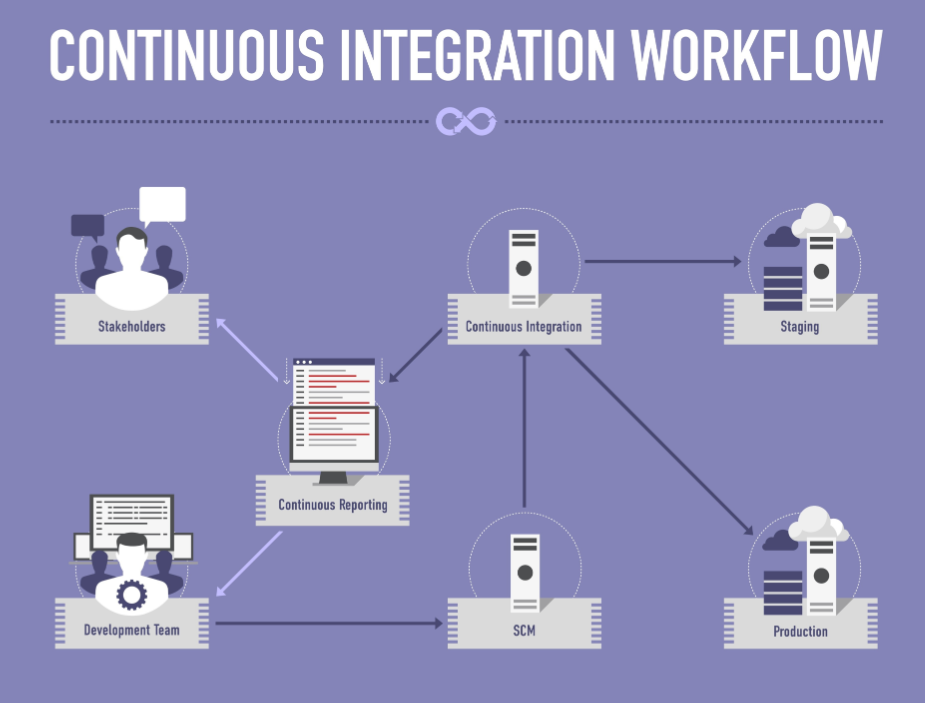
In contemporary software management, the development process is increasingly automated through CI/CD (Continuous Integration/Continuous Deployment). This bridges the gap between development and operations, allowing for multiple releases per day rather than one large “launch” every few months.