Viral Marketing
 Definition
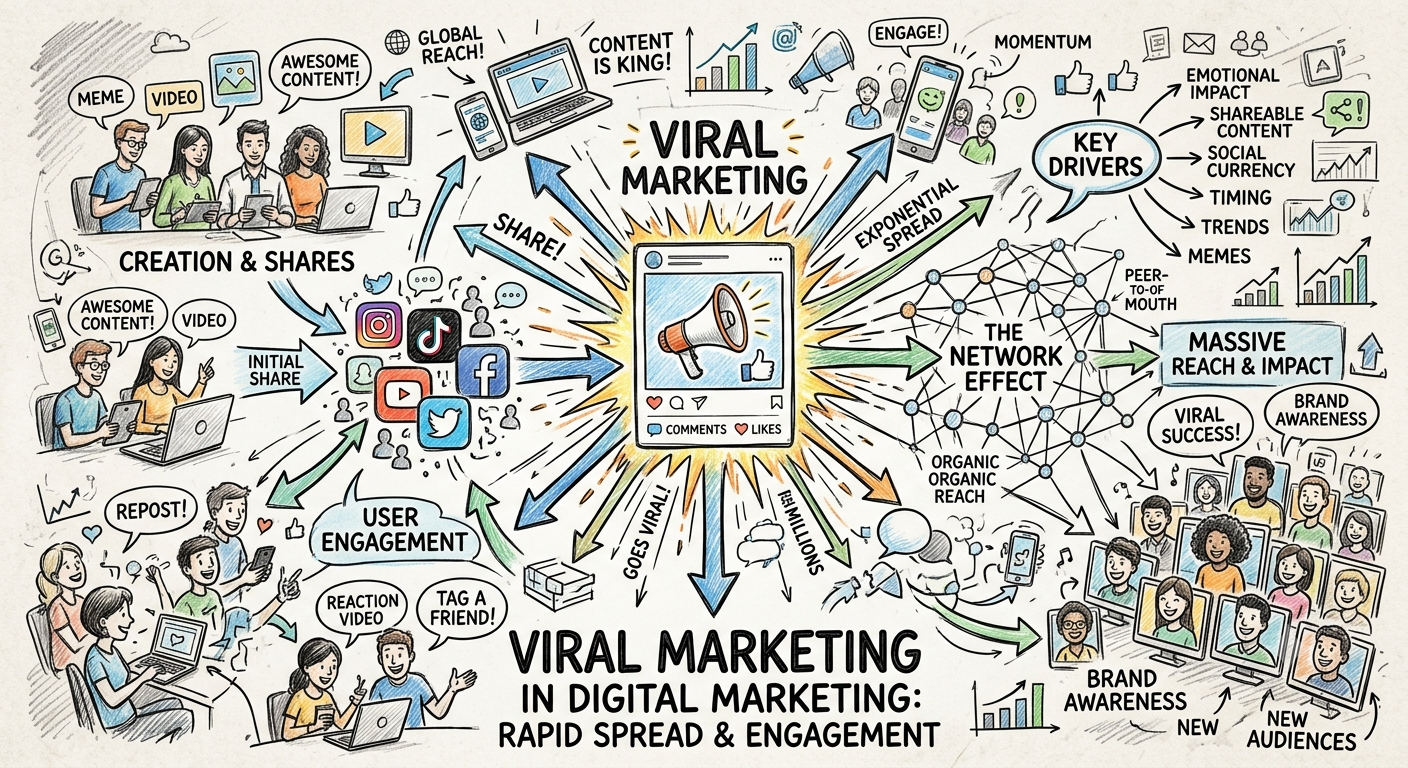
Viral Marketing is a digital marketing strategy in which content is created in such a way that people share it rapidly through the internet. Like a virus spreads from one person to another, viral marketing spreads through social media, email, messaging apps, blogs, and websites, reaching a large audience in a short period with little additional cost.
The main goal of viral marketing is to increase brand awareness, website traffic, customer engagement, and sales through user sharing.
How Viral Marketing Works
The viral marketing process typically follows these steps:
- A business creates attractive and engaging content.
- The content is published on digital platforms.
- Users like, comment, and share the content.
- Their friends and followers see and share it further.
- The content reaches thousands or even millions of people.
- The business gains increased visibility, traffic, and potential customers.
Flow:
Business → Create Content → Share Online → Users Share → Viral Spread → Brand Growth
Characteristics of Viral Marketing
- Easy to share.
- Interesting and engaging.
- Emotionally appealing (funny, inspiring, surprising, or informative).
- Reaches a large audience quickly.
- Low promotional cost.
- Encourages audience participation.
- Can spread across multiple digital platforms.
Types of Viral Marketing
1. Social Media Viral Marketing
Content spreads through platforms like Facebook, Instagram, X (Twitter), LinkedIn, and YouTube.
Example: A short Instagram Reel that gains millions of views.
2. Video Viral Marketing
Creative or entertaining videos become popular through online sharing.
Example: Funny advertisements or challenge videos.
3. Meme Marketing
Brands create humorous memes related to trending topics.
Example: Companies using popular internet memes to promote products.
4. Email Viral Marketing
Interesting emails are forwarded from one user to another.
Example: Referral programs that reward users for inviting friends.
5. Influencer Viral Marketing
Influencers promote products to their followers, increasing the chances of viral reach.
Example: A famous YouTuber reviewing a new smartphone.
6. Referral Marketing
Customers receive rewards for referring new customers.
Example: “Invite your friend and both of you get ₹500 cashback.”
Components of Viral Marketing
- High-quality content
- Social media platforms
- Audience engagement
- Sharing features
- Influencers
- Referral programs
- Emotional appeal
- Call-to-action (CTA)
Advantages of Viral Marketing
1. Low Cost
A single piece of content can reach millions without spending large advertising budgets.
2. Wide Audience Reach
Content can spread globally within a short period.
3. Increases Brand Awareness
Millions of users may become familiar with the brand.
4. Higher Customer Engagement
People interact through likes, comments, shares, and discussions.
5. Builds Brand Trust
Recommendations from friends or influencers are generally considered more trustworthy than traditional advertisements.
6. Increases Website Traffic
Viral campaigns attract more visitors to websites or online stores.
7. Generates More Sales
Greater visibility often leads to increased customer inquiries and purchases.
Disadvantages of Viral Marketing
1. Unpredictable Success
There is no guarantee that content will become viral.
2. Difficult to Control
Once content spreads, businesses have limited control over how it is shared or interpreted.
3. Negative Publicity
Negative or controversial content can also spread quickly and damage the brand’s reputation.
4. Short-Term Popularity
Many viral campaigns lose attention after a short time.
5. High Competition
Millions of pieces of content compete for users’ attention every day.
Examples of Viral Marketing
- Social media challenges that encourage users to participate.
- Funny or emotional advertisement videos shared widely.
- Referral campaigns by companies like ride-sharing or payment apps.
- Trending hashtags on social media.
- Product giveaway contests encouraging users to tag friends and share posts.
Best Practices for Viral Marketing
- Create original and high-quality content.
- Focus on storytelling and emotional appeal.
- Keep content short, clear, and engaging.
- Use trending topics and hashtags.
- Include a clear call-to-action (CTA).
- Encourage users to like, comment, and share.
- Collaborate with influencers.
- Monitor campaign performance using analytics.
Difference Between Traditional Marketing and Viral Marketing
| Basis | Traditional Marketing | Viral Marketing |
|---|---|---|
| Cost | High | Low |
| Reach | Limited | Global |
| Speed | Slow | Very Fast |
| Sharing | Business-driven | Customer-driven |
| Customer Engagement | Moderate | High |
| Communication | One-way | Two-way |
Importance of Viral Marketing
- Enhances brand awareness.
- Reaches millions of potential customers quickly.
- Increases website traffic.
- Builds customer trust through sharing.
- Improves customer engagement.
- Generates leads and sales.
- Provides a high return on investment (ROI).
Conclusion
Viral marketing is one of the most powerful strategies in digital marketing. It uses engaging, shareable content to spread rapidly through online platforms. When executed effectively, viral marketing helps businesses achieve global reach, stronger brand recognition, increased customer engagement, and higher sales while keeping marketing costs relatively low. Although its success cannot be guaranteed, a well-planned viral campaign can have a significant impact on a brand’s growth and visibility.